Nebari architecture
Nebari relies on a few core concepts to make it work. This guide will help you understand how Nebari works and how to use it.
Some of the most important concepts that Nebari relies on are Terraform and Kubernetes.
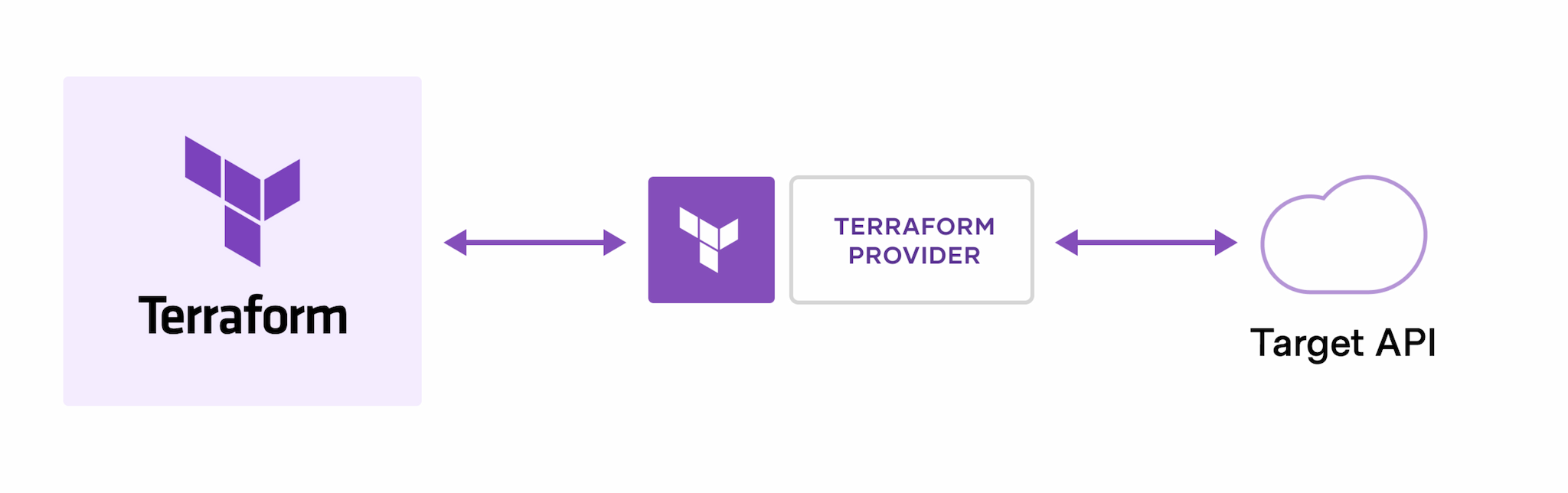
Terraform
Terraform is an excellent option for deploying and managing cloud infrastructure. It allows you to easily configure any number of cloud servers as well as all the required connections and features to ensure security, redundancy, and scalability. Check out the Terraform documentation to learn how it works..
Kubernetes
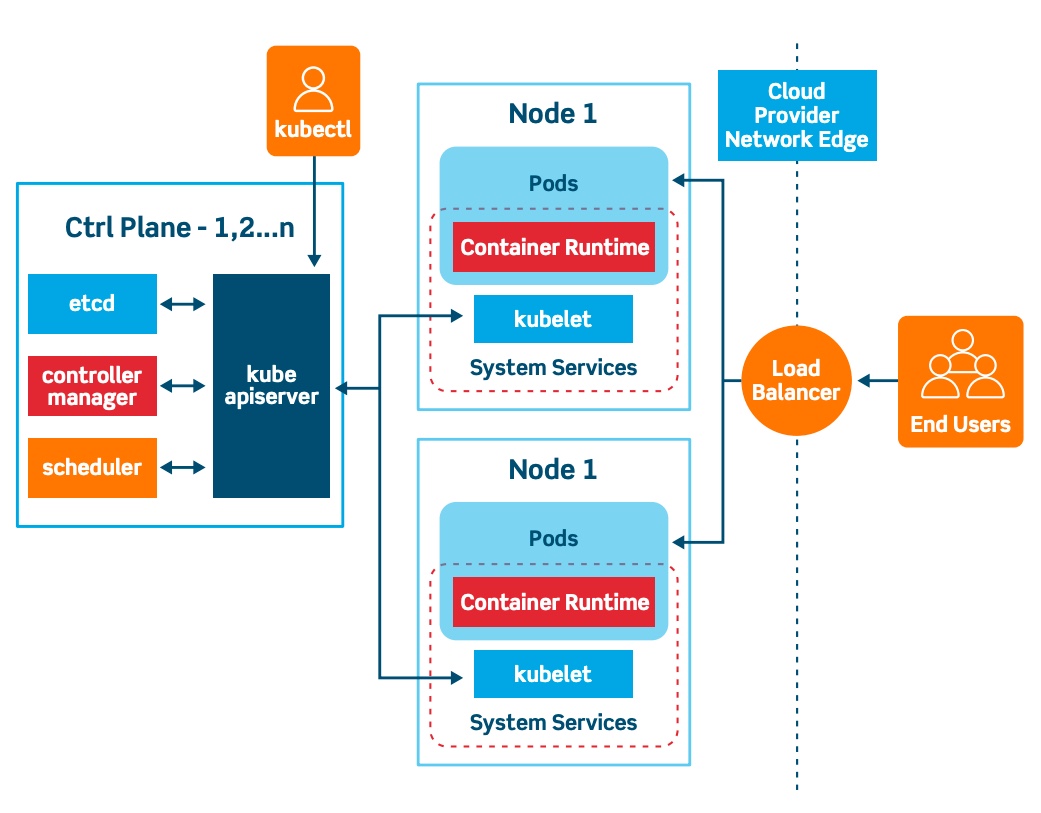
Kubernetes is a powerful open-source container orchestration system, initially developed by Google, for managing containerized applications in a cluster. It aims to provide better ways of managing related, distributed components and services across varied infrastructure.
Kubernetes provides fine-grained controls in applications and container lifecycles, especially in dynamic environments. Tasks such as monitoring, availability, and deployment are simplified by the use of controllers, which are control loops that monitor your Kubernetes cluster and make changes as needed to maintain the expected state. You can learn more details in the Kubernetes documentation.
Infrastructure
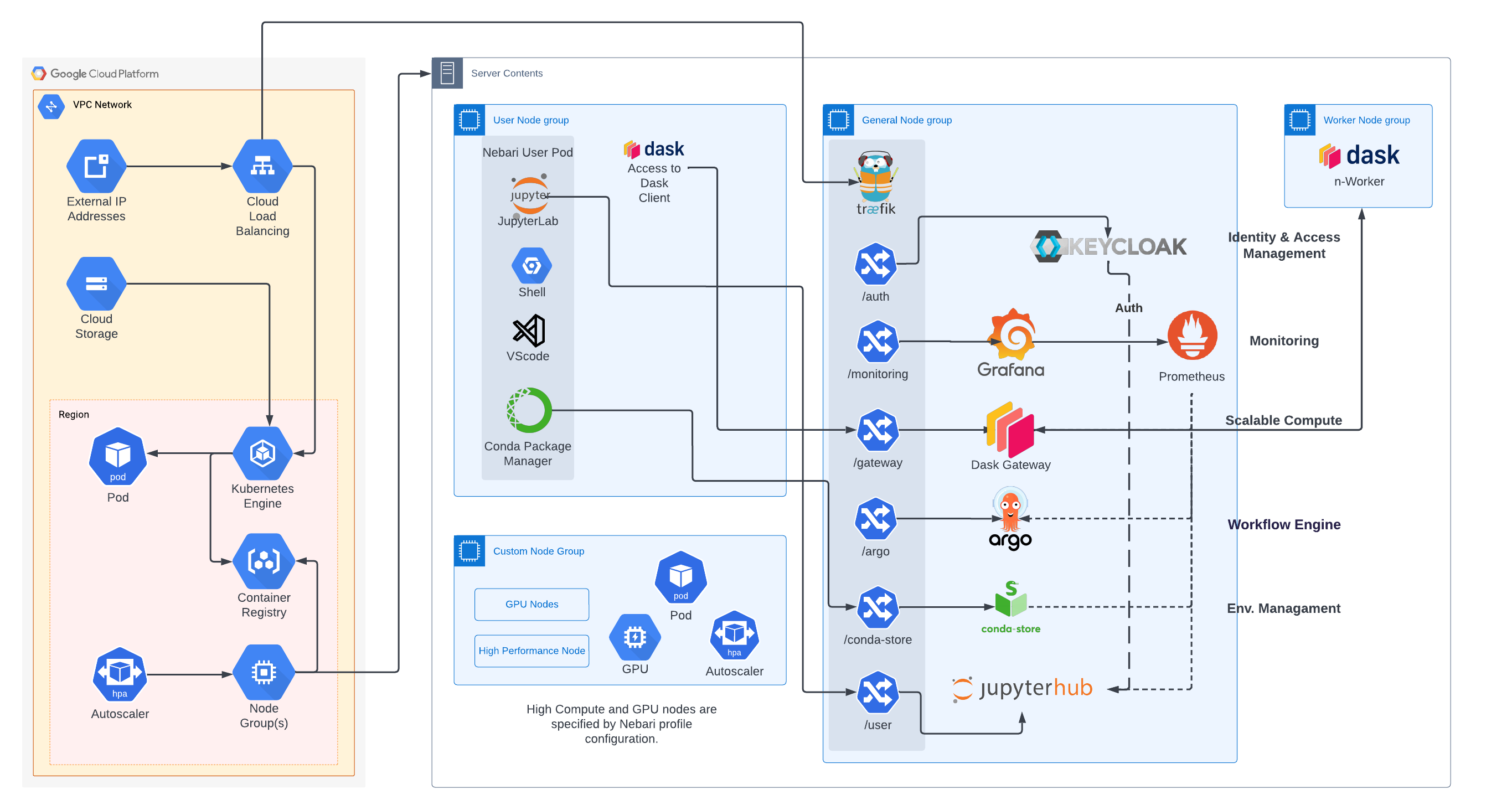
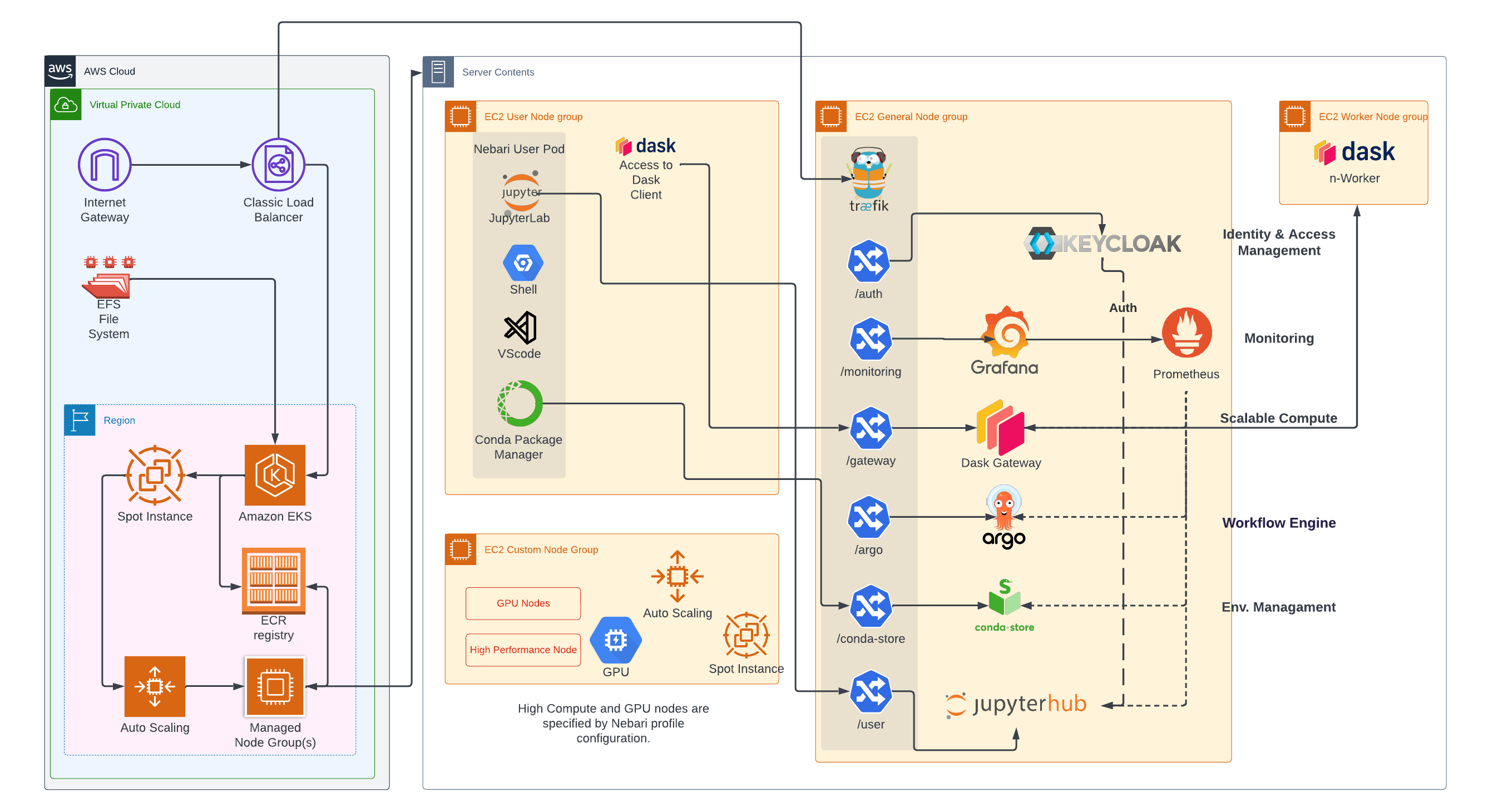
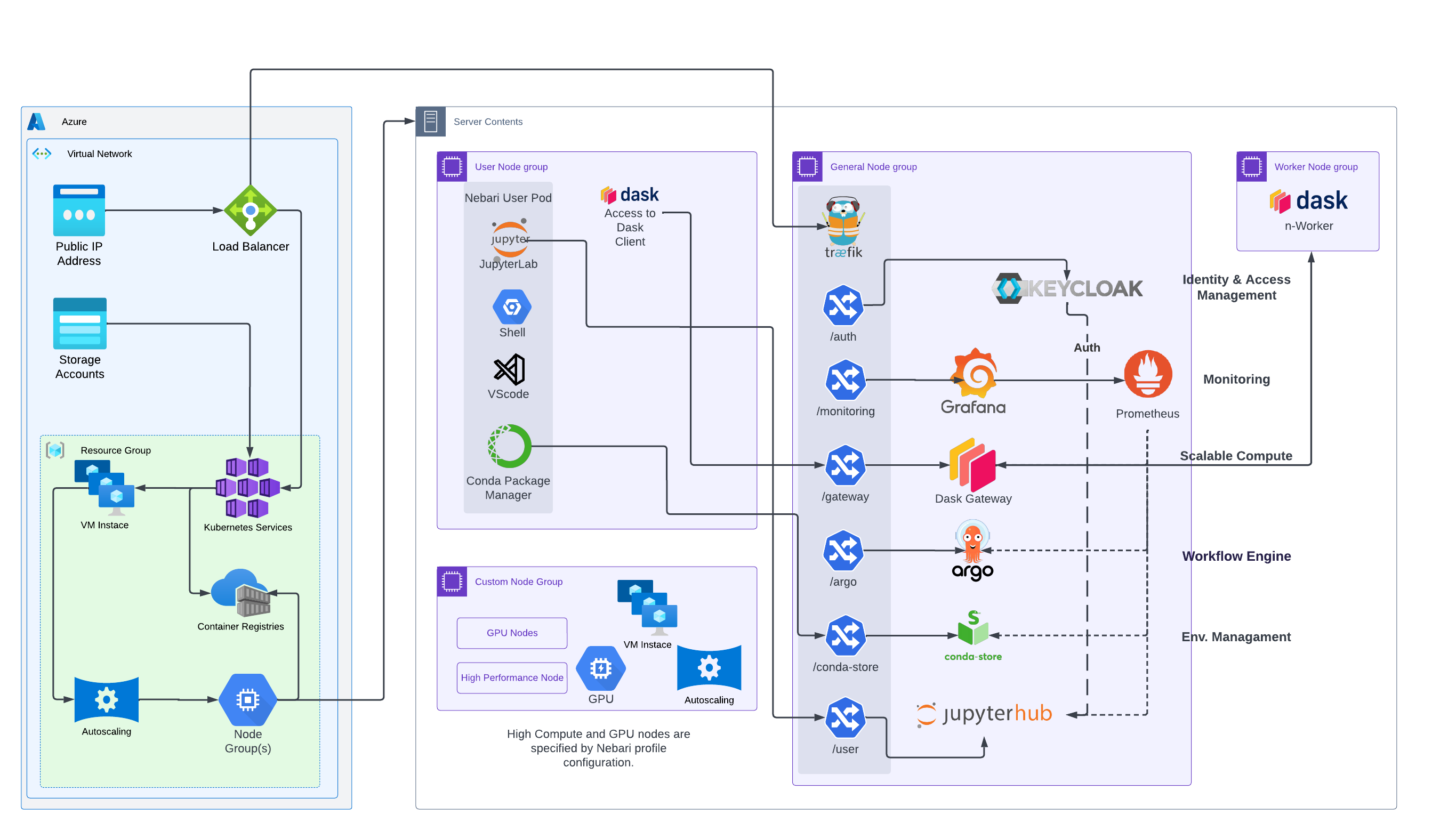
Below are diagrams to help show the architecture and design behind Nebari. The diagrams are meant to show different levels and cloud specific infrastructure.
- Google GCP
- Amazon AWS
- Azure